The Science Behind Regenerative Skincare & Cellular Signalling
The Science Behind Regenerative Skincare: How Cellular Signalling Changes Skin Health
What if the next major development in skincare is not simply another active ingredient, but a better understanding of how skin cells communicate?
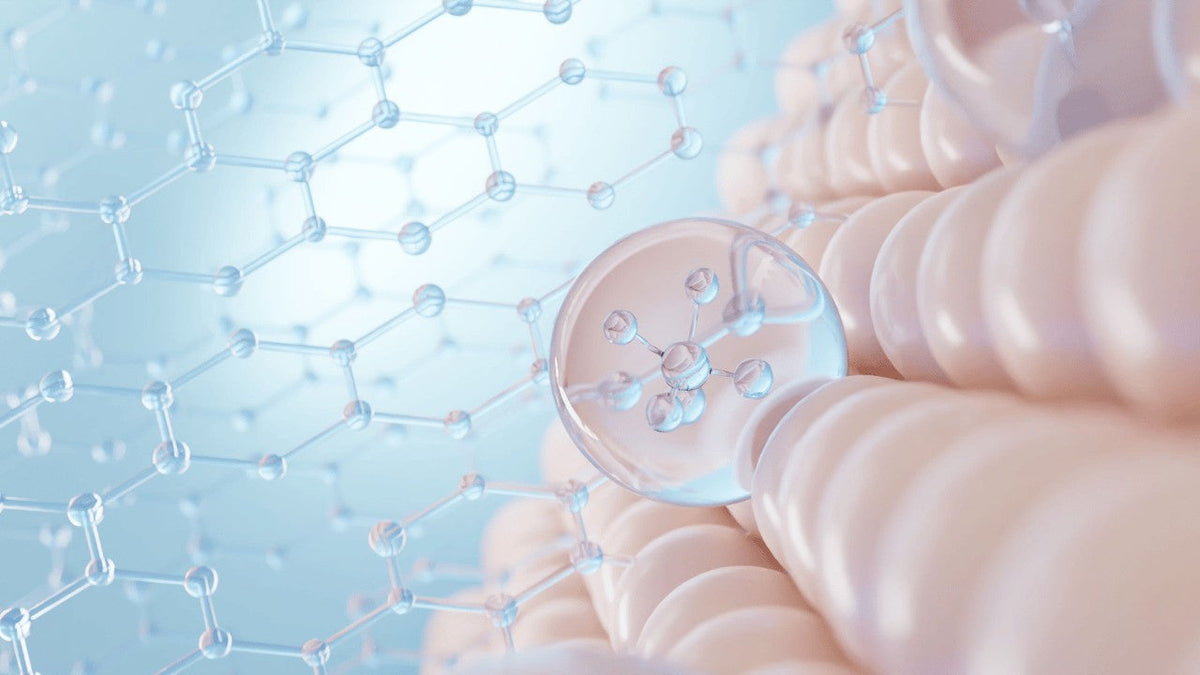
Skin is a complex biological organ. Its appearance and function depend on interactions between keratinocytes, fibroblasts, extracellular matrix components, immune cells and signalling molecules. As skin ages or experiences environmental stress, these interactions can change, contributing to visible changes in texture, elasticity, hydration and pigmentation.
This is where regenerative skincare is attracting scientific interest.
Rather than looking only at individual ingredients, regenerative skincare investigates the biological signals that influence the skin's repair and renewal environment.
One important area of research involves human adipose-derived stem cells (ADSCs) and their secretome — the collection of molecules released by these cells. Research suggests that ADSC-derived secretome and conditioned media may influence processes involved in skin repair, cellular communication and tissue remodelling. However, clinical evidence remains an evolving area, and laboratory or early clinical findings should not automatically be interpreted as proof of a cosmetic product's clinical effectiveness.
Becura's HumaneStem™ range applies this scientific concept to advanced skincare by combining human adipose-derived stem cell technology with specialised delivery systems, including liposomal and niosomal technologies.
What is Regenerative Skincare?
Regenerative skincare is an emerging area of skincare science focused on supporting the biological processes associated with skin renewal, repair and maintenance.
Traditional skincare often asks:
Which ingredient can address this visible concern?
Regenerative skincare adds another question:
How can we support the biological environment involved in skin renewal?
This distinction is important.
Regenerative skincare does not necessarily replace established ingredients such as retinol, vitamin C, peptides or hyaluronic acid. Instead, it can combine established actives with newer biological and delivery technologies.
This is why Regenerative Skincare Products increasingly represent a combination of biotechnology, formulation science and dermatology rather than a single ingredient category.
What is Cellular Signalling?
To understand regenerative skincare, it is important to understand cellular signalling.
Cells do not function independently.
They continuously communicate with their surrounding environment through signalling molecules. These signals can influence processes such as cellular activity, migration, proliferation, inflammation and extracellular matrix behaviour.
In skin, this communication is particularly important because maintaining healthy tissue requires continuous coordination between different cell types.
For example, fibroblasts are involved in producing components of the extracellular matrix, while keratinocytes contribute to the epidermal barrier.
The skin therefore operates as an interconnected biological system.
Cellular Regeneration Skincare explores how this communication can be supported through advanced technologies.

What Are Human Adipose-Derived Stem Cells?
Human adipose-derived stem cells (ADSCs) are a type of mesenchymal stem cell obtained from adipose tissue.
They have been extensively studied in regenerative medicine because of their ability to produce a range of biologically active molecules.
Importantly, much of the scientific interest is not simply about the cells themselves.
It is also about their secretome — the collection of molecules they release into their surrounding environment.
Research describes ADSC secretome as containing a complex mixture of soluble proteins, cytokines, growth factors and vesicular components.
This has led researchers to investigate cell-free regenerative approaches, including conditioned media and extracellular-vesicle-based technologies.
What is the Stem Cell Secretome?
The term secretome refers broadly to the collection of substances secreted by cells.
In the context of adipose-derived stem cells, the secretome can contain multiple types of biological signals.
These may include:
-
Growth factors
-
Cytokines
-
Chemokines
-
Proteins
-
Extracellular vesicles
-
Other signalling molecules
The exact composition can vary depending on factors such as the cell source, culture conditions, processing methods and formulation.
This variability is one reason why Stem Cell Derived Growth Factors Skincare should not be treated as a single standardised category.
The science depends heavily on how the biological material is sourced, produced, characterised and formulated.
What is Stem Cell Conditioned Media Skincare?
Stem Cell Conditioned Media Skincare is based on the use of material collected from a controlled cell-culture environment.
During culture, cells release various molecules into the surrounding medium.
That medium can subsequently be collected and processed.
A simplified pathway is:
Human Cell Source → Controlled Culture → Cellular Signals → Collection → Processing → Formulation
This is fundamentally different from placing live stem cells into a topical cosmetic product.
Current research increasingly explores cell-free approaches using the secretome or conditioned medium because the regenerative effects of mesenchymal stem cells may be mediated substantially through paracrine signalling rather than direct differentiation of the cells themselves.
How Can Cellular Signalling Influence Skin Health?
Research into ADSC-derived secretome provides several reasons for interest in regenerative skincare.
1. Skin Cell Communication
Cell-derived signals can influence communication between cells and their surrounding microenvironment.
This is one of the fundamental concepts behind regenerative skincare.
2. Extracellular Matrix Remodelling
The extracellular matrix provides structural support to skin tissue.
Research has investigated whether ADSC-derived components can influence processes associated with collagen, elastin and matrix remodelling.
3. Skin Repair Research
Preclinical and clinical research has investigated conditioned media and adipose-derived cell approaches in wound healing and skin rejuvenation.
A recent systematic review found promising signals across several skin-quality outcomes but also highlighted substantial variation between studies and the need for standardised protocols and longer-term research.
4. Photoageing Research
ADSCs and their secretome have also been investigated in relation to photoageing, including oxidative stress and UV-associated cellular changes.
These findings help explain why regenerative skincare has become an important area of research — while also demonstrating why evidence needs to be interpreted carefully.
What Does the Research Actually Tell Us?
This is where responsible skincare communication matters.
Research into ADSC-derived secretome and conditioned media is promising, but it is not yet appropriate to treat all stem-cell-derived skincare products as clinically equivalent.
Studies differ in:
-
Cell source
-
Processing methods
-
Concentrations
-
Delivery method
-
Treatment protocols
-
Outcome measurements
-
Study population
A 2025 systematic review of adipose-derived cell therapies identified potential improvements in some measures of skin quality, including wrinkles and other photoageing-related outcomes, but noted significant heterogeneity and insufficient evidence for definitive conclusions.
Therefore, terms such as regeneration, cellular signalling, and stem cell technology should be understood as descriptions of the scientific approach — not guarantees of a particular clinical outcome.
That distinction is essential for trustworthy skincare communication.
How Becura HumaneStem™ Applies Regenerative Skincare Science
Becura approaches regenerative skincare through the combination of human cell science and advanced delivery technology.
The HumaneStem™ range includes two formulations designed around different skin-renewal approaches.
HumaneStem™ Serum: Human Cell Science + Vitamin C Niosomes
The HumaneStem™ Serum combines human adipose-derived stem cell technology with Vitamin C Niosomes.
This creates a formulation built around two complementary concepts:
Regenerative Signalling + Advanced Delivery
Vitamin C is an established skincare active, while niosomal technology represents an advanced formulation approach for incorporating active ingredients.
The serum is positioned for skin concerns including:
-
Dull-looking skin
-
Uneven-looking skin tone
-
Visible pigmentation concerns
-
Loss of radiance
-
Skin texture
For people searching for a Stem Cell Serum for Skin, HumaneStem™ provides an example of how regenerative technology can be integrated with established skincare actives.
Explore Becura HumaneStem™ Serum
HumaneStem™ Cream: Regenerative Signalling + Controlled Renewal
HumaneStem™ Cream combines human adipose-derived stem cell technology with Retinol Niosomes.
Retinol is one of the most extensively studied cosmetic ingredients for skin renewal.
The HumaneStem™ formulation therefore brings together two different scientific approaches:
Human Cell-Derived Technology + Advanced Retinol Delivery
The formulation is designed for routines focused on:
-
Mature-looking skin
-
Uneven texture
-
Visible signs of ageing
-
Hydration
-
Skin renewal
For consumers researching a Stem Cell Anti Ageing Cream, this combination demonstrates how regenerative concepts can be integrated with an established anti-ageing active.
Explore Becura HumaneStem™ Cream
Why Delivery Technology Matters
An active ingredient's presence in a formulation is only one part of formulation science.
The way an ingredient is incorporated, stabilised and delivered can influence formulation characteristics and performance.
Liposomal Technology
Liposomes are vesicular structures used in pharmaceutical, cosmetic and biomedical formulation research.
They can encapsulate selected compounds and are investigated as delivery systems.
HumaneStem™ Cream incorporates a liposomal approach for its human cell-derived regenerative component.
Niosomal Technology
Niosomes are another type of vesicular delivery system studied for topical formulations.
HumaneStem™ uses niosomal technology for selected actives, including retinol in the Cream and Vitamin C in the Serum.
This is an important part of Becura's approach:
The technology is not only in the ingredient. It is also in how the ingredient is formulated and delivered.
Human Stem Cell Skincare vs Conventional Anti-Ageing Skincare
It is useful to understand that these are not necessarily competing categories.
Conventional anti-ageing skincare
Often focuses on established active ingredients such as:
-
Retinol
-
Vitamin C
-
Peptides
-
Hyaluronic acid
-
Antioxidants
Regenerative skincare
Adds technologies focused on:
-
Cellular signalling
-
Human cell-derived components
-
Conditioned media
-
Advanced delivery systems
The emerging direction is therefore integration rather than replacement.
This is also where Next Generation Skincare Technology becomes relevant: combining established dermatological ingredients with newer biotechnology-inspired formulation approaches.
Is Regenerative Skincare the Future of Anti-Ageing?
Regenerative skincare is an emerging field rather than a replacement for established dermatological science.
Research into adipose-derived stem cells, conditioned media and secretome-based approaches continues to expand. A recent review describes increasing scientific interest in cell-free approaches using ADSC secretome for skin regeneration, while also identifying challenges that need to be addressed before broader clinical translation.
For skincare, the opportunity lies in combining:
Biology + Formulation Science + Delivery Technology + Dermatological Research
That combination could define the next generation of advanced skincare.
Who May Be Interested in Regenerative Skincare?
Consumers researching Regenerative Anti Ageing Skincare may be interested in products designed around:
-
Mature skin
-
Visible fine lines
-
Uneven texture
-
Dull appearance
-
Loss of radiance
-
Hydration support
However, individual skin concerns are different.
A Human Stem Cell Skin Care Treatment also should not be confused with a topical cosmetic product. In-clinic regenerative procedures and topical skincare can involve different materials, concentrations, delivery methods, regulatory considerations and levels of clinical evidence.
Anyone considering a medical or aesthetic treatment should discuss suitability with a qualified dermatologist or other appropriately licensed healthcare professional.

Conclusion
The science behind regenerative skincare begins with a simple biological principle:
Skin cells communicate.
That communication influences the complex processes involved in maintaining and renewing skin.
Research into human adipose-derived stem cells has therefore expanded beyond the cells themselves to their secretome, conditioned media and cellular signalling molecules. Current evidence is promising but still developing, with differences between studies making careful interpretation essential.
Becura HumaneStem™ brings this emerging science into an advanced skincare framework by combining:
Human Adipose-Derived Stem Cell Technology
+ Liposomal Delivery
+ Niosomal Delivery
+ Established Skincare Actives
+ Advanced Skin Renewal Formulation
The result is a different way of thinking about skincare — one that brings together human cell science, regenerative concepts and modern formulation technology.
As research continues, regenerative skincare has the potential to become an increasingly important part of next-generation skin science.
Frequently Asked Questions
What is regenerative skincare?
Regenerative skincare is an emerging approach that focuses on supporting skin renewal and repair through technologies involving cellular signalling, cell-derived components and advanced formulation systems.
What are human adipose-derived stem cells?
Human adipose-derived stem cells are mesenchymal stem cells obtained from adipose tissue. They are studied extensively for their regenerative potential and their ability to produce a range of signalling molecules.
What is stem cell conditioned media?
Stem cell conditioned media is material collected from a controlled cell-culture environment. It can contain soluble proteins, cytokines, growth factors and vesicular components released by cultured cells.
Does stem cell skincare contain live stem cells?
Not necessarily. Cell-derived topical skincare can use conditioned media or other cell-derived components rather than live cells. Consumers should check the specific formulation and manufacturer's ingredient information.
What is the difference between a stem cell serum and a traditional serum?
A stem cell serum may incorporate cell-derived components or regenerative technologies, whereas a traditional serum may rely primarily on established cosmetic actives such as antioxidants, retinoids or humectants.
What makes HumaneStem™ different?
HumaneStem™ combines human adipose-derived stem cell technology with advanced delivery systems. The Serum combines this approach with Vitamin C niosomes, while the Cream combines it with retinol niosomes.
Follow us on Instagram for skincare science, updates & more.